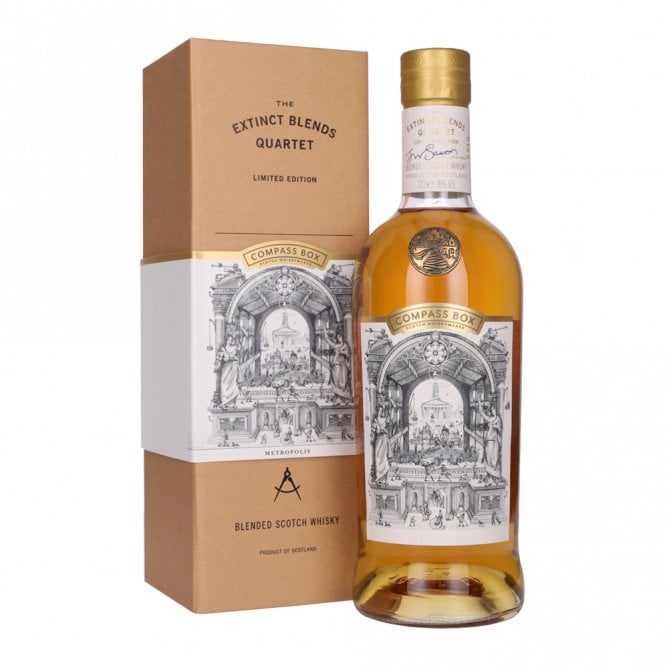
It’s one of the oldest and most persistent questions in the world of spirits: what exactly is the difference between Scotch, whisky, and whiskey? For newcomers, getting into whisk(e)y can feel like a linguistic minefield rather than a journey of discovery, but we’re here to help.
No matter whether you’re wondering why some bottles feature an ‘e’ and others don’t, or why whisky is sometimes just referred to as Scotch, read on and all will be explained.
TL;DR
The main differences lie in geography and spelling: “Whisky” is used in Scotland, Canada, Japan and many other countries, while “Whiskey” (with an ‘e’) is most commonly attributed to spirits made in Ireland and the United States. The term Scotch, meanwhile, is a regulated and legally protected term that refers to whisky made exclusively in Scotland, matured for a minimum of three years in oak casks and bottled at a minimum of 40%.
Table of contents
- Whisky as an umbrella term
- What constitutes Scotch whisky?
- What’s the difference between “whisky” and “whiskey”?
- Explore a range of Scotch, whisky, and whiskey at The Whisky World
Whisky as an umbrella term
To cut through the complexity, the easiest way to begin is by viewing whisky (spelt without the ‘e’) as the general, global term for the spirit itself. It functions as the umbrella that covers everything from Scottish single malts to Japanese blends and Canadian rye. But what exactly is whisky?
At its core, all whisky is the result of four simple ingredients: grain, water, yeast, and time spent in an oak barrel. The subtle differences between types often come down to three key technical terms you might hear discussed:
- Mash Bill: This is the recipe dictating which grains are used in fermentation. This recipe might feature barley, corn, rye, or wheat, and the combination hugely influences the final flavour.
- Distillation: The process of separating alcohol from water. Different stills (pot stills vs. column stills) and the number of times the liquid is distilled greatly impact the spirit’s final character and strength.
- Maturation: This refers to the time the spirit spends ageing in wooden casks. The type of wood, whether it’s new oak or previously held sherry, bourbon, or port, imparts up to 80% of the final flavour and colour.
What constitutes Scotch whisky?
While the terms “whisky” and “Scotch” are often used interchangeably, Scotch whisky is a highly regulated product that must meet a series of specific legal requirements. These rules, laid out in the Scotch Whisky Regulations 2009, protect the quality and heritage of Scotland’s most famous export.
A spirit can only be labelled as Scotch if it adheres to these strict criteria:
- Origin: It must be distilled and matured exclusively in Scotland.
- Grain: It must be made from water and malted barley, with only whole grains of other cereals permitted.
- Maturation: It must be matured in oak casks in Scotland for a minimum of three years.
- Strength: The resulting spirit must have an alcoholic strength by volume (ABV) of no less than 40%.
- Additives: The only permitted additives are water and caramel colour (E150A) for colouring.
These precise requirements ensure that every bottle of Scotch offers the quality and character consumers expect, distinguishing it completely from other whiskies made around the world.
Examples of Scotch whisky
Within the category of Scotch, there are five distinct types, three of which are most commonly enjoyed by enthusiasts and beginners alike: